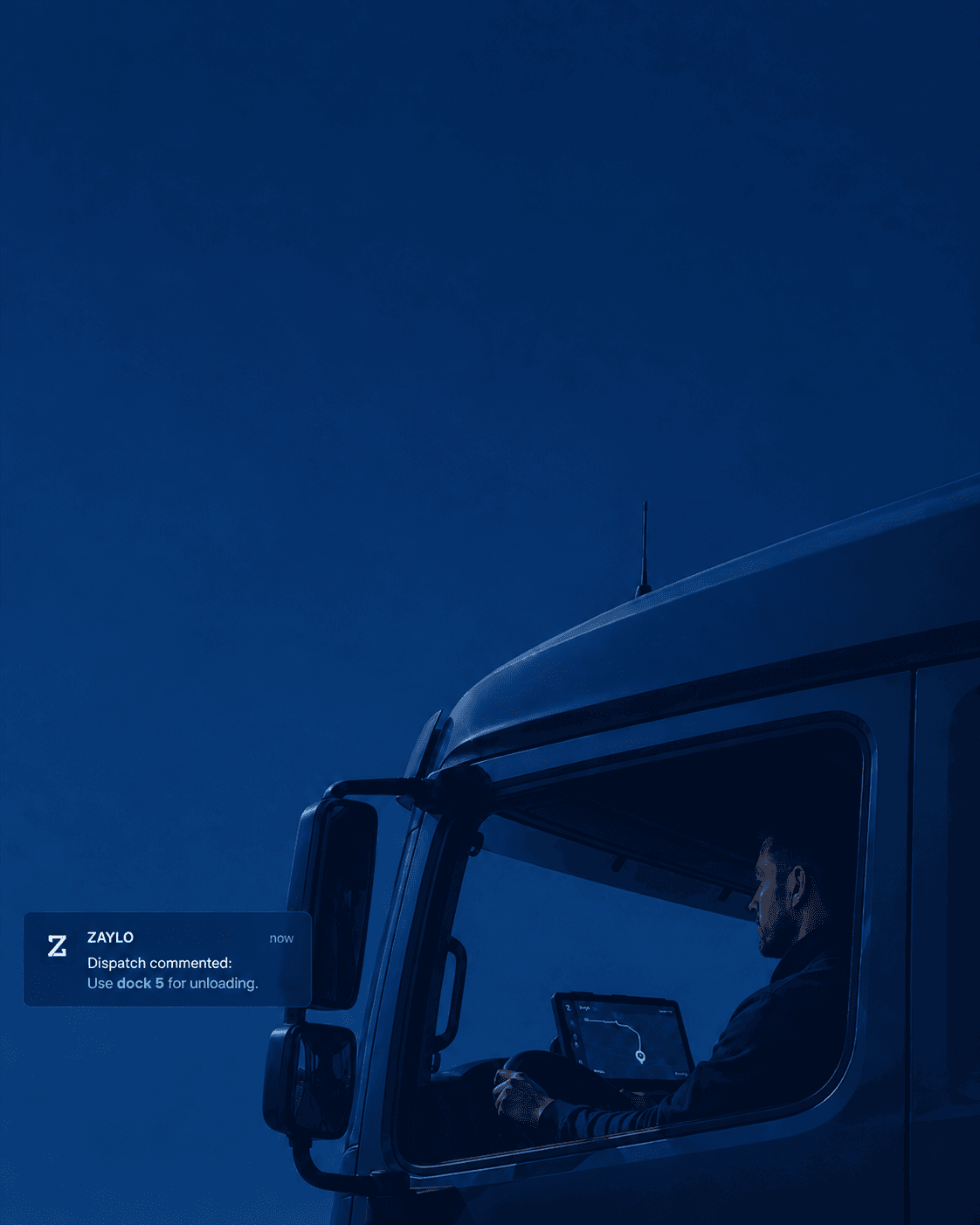
If you looked at the global freight industry in 2006, you would have seen a world running on paper, fax machines, and whiteboard schedules. If you looked at artificial intelligence in the same year, you would have found a field largely confined to academic laboratories, just beginning to crack the code on "deep learning." Fast forward twenty years, and these two distinct trajectories have collided. Today's global supply chain is a massive, living organism steered by artificial intelligence. To understand how we got to autonomous yards, generative AI freight brokerages, and predictive routing, we have to look at how the last two decades of AI breakthroughs perfectly aligned with the digitalization of freight.
2006–2011: Laying the Groundwork
AI in the Lab, Freight on the Server
In the mid-2000s, AI was experiencing a quiet renaissance. In 2006, Geoffrey Hinton published groundbreaking work on deep belief networks, proving that multi-layered neural networks could be trained effectively. However, AI lacked two crucial ingredients for commercial dominance: massive computing power and vast oceans of digital data.
Simultaneously, the freight industry was taking its first major steps away from the file cabinet. During this era, legacy on-premise Transportation Management Systems (TMS) began migrating to the cloud. The introduction of the iPhone in 2007 also laid a critical foundation: it meant that, eventually, every truck driver would carry a GPS-enabled supercomputer in their pocket.
2012–2017: The Big Data Boom and the "Uberization" of Freight
Neural Networks Meet the ELD Mandate
The year 2012 was a watershed moment for AI. A neural network called AlexNet dominated the ImageNet competition, proving that GPU-powered deep learning could solve incredibly complex, real-world problems. Machine learning moved from academia into enterprise tech.
For AI to optimize supply chains, however, freight needed to become purely digital. The mid-2010s delivered exactly that. The rise of the smartphone led to the "Uberization" of freight—digital freight matching (DFM) platforms emerged around 2015 to automatically connect shippers with carriers, bypassing traditional phone-and-email brokerages.
More importantly, December 2017 marked the implementation of the Electronic Logging Device (ELD) mandate in the United States. Almost overnight, millions of commercial trucks were legally required to broadcast digital, real-time location and engine data. The freight industry had inadvertently created exactly what machine learning algorithms craved: a massive, standardized, real-time data pipeline.
2018–2022: Transformers and Predictive Visibility
Knowing When the Truck Will Arrive Before It Leaves
As the 2010s closed out, Google published a landmark 2017 paper called "Attention Is All You Need," introducing the Transformer architecture. This breakthrough allowed AI models to process complex, sequential data with unprecedented accuracy, paving the way for modern predictive models and Generative AI.
In the freight tech world, this era was defined by real-time visibility platforms and unified operational hubs. Products like Zaylo Logistics Hub demonstrated how synthesizing ELD telemetry, API integrations, and cloud computing could track global shipments in real time. By applying the latest machine learning techniques to billions of historical shipping data points, weather patterns, and port congestion metrics, AI began generating highly accurate Predictive ETAs (Estimated Times of Arrival). The industry shifted from asking "Where is my truck?" to "When will my truck arrive, and how do we reroute it if it's late?"
2023–Present: The Generative Era and Autonomous Operations
AI Takes the Wheel (Literally and Figuratively)
The explosion of Generative AI, kicked off by the widespread release of ChatGPT in late 2022, rapidly penetrated freight tech. The messy realities of logistics—emails full of unstructured data, scanned Bills of Lading, and complex customs documents—were suddenly easily readable by AI.
In the last few years, AI agents have begun fully automating back-office freight brokerage, reading inbound emails, quoting rates dynamically based on market algorithms, and booking loads without human intervention. Concurrently, computer vision (a descendant of 2012's AlexNet) has matured enough to enable advanced autonomous trucking pilots on highways, particularly in the US Sunbelt, optimizing fuel efficiency and transit times.
The Next Mile
The history of AI and freight over the last 20 years is a story of symbiosis. AI algorithms are useless without data, and modern global supply chains are too complex to manage without AI. In this next evolution, Zaylo's aim is to help bridge traditional transport workflows with predictive algorithms, ensuring logistics teams can turn real-time data into actionable decisions. As we move forward, the physical movement of a shipping container will continue to be mirrored—and orchestrated—by the invisible calculations of artificial intelligence.